Wednesday, May 16, 2018

Sermon on Recieving Distinguised Alumni Award from the General Seminary May 2018


John 14:1-6 New Revised Standard Version (NRSV)

14 “Do not let your hearts be troubled. Believe[a] in God, believe also in me. In my Father’s house there are many dwelling places. If it were not so, would I have told you that I go to prepare a place for you?[b] And if I go and prepare a place for you, I will come again and will take you to myself, so that where I am, there you may be also. And you know the way to the place where I am going.”[c] Thomas said to him, “Lord, we do not know where you are going. How can we know the way?” Jesus said to him, “I am the way, and the truth, and the life. No one comes to the Father except through me.

We all have heard the old joke:

“One day a man dies, who was a devout Christian. Saint Peter meets him at the Pearly Gates and begins to give him a tour of Heaven. As the tour goes on, Saint Peter points out all the different Christians. "There's the Baptists, there's the Lutherans, the Methodists, the Presbyterians", and so forth. As they come to this one group way off to themselves, Saint Peter motions for the man to come closer and whispers. "Now, for this next group, we need to be really quiet. They are the Catholics and they think they're the only ones in Heaven."

Well, for a part of my life I actually thought that was true. I was born into a devout Roman Catholic family in post-World War II New York City.  My father was a veteran of the war who survived with shrapnel in his legs and head causing him to lose 60% of his hearing in his right ear.  He also suffered from Post-Traumatic Stress Disorder.  When he lay wounded in the forest of Belgium during the Battle of the Bulge he vowed that if he survived he would return steadfastly to his faith, and he prayed for survival.  He kept that promise, my Father was at Mass every Sunday and reveled in the smell of incense.  He told me as I complained of the smoke from the incense that caused my child’s eyes to burn, that I needed to get used to it because, “That is how heaven smells”.

My mother was also a pillar of the Church.  She followed its rituals very closely; she had a special devotion to the Virgin Mary.  She had six pregnancies and delivered five healthy children, and after each birth, she would return into the congregation only after undergoing the old tradition of “The Churching of Women”, the ceremonial blessing given to mothers after recovery from childbirth. I remember going with her twice after the birth of my youngest siblings for her to be blessed and then be again welcomed back into the congregation. Mom belonged to the Legion of Mary and the Rosary Society.  We prayed the rosary together as a family many times.

In 1960, after the election of John Kennedy, I thought I was the luckiest kid in the world; I had hit the trifecta: I was Irish-American, I lived in New York City and I was a Roman Catholic. What could be better?

But soon I began to wonder about the fate of those who were not as lucky as I was, who were not Catholic.  What would happen to their eternal souls after they died?  On the same floor that we lived on in a five story walk up apartment building in the Bronx, there were three neighbors that had an impact on my life as a young child.  Marie Deenihan who lived next to us with her husband, became a grandmother figure for us kids.  She was a wonderful woman, but she was a Lutheran. Then there was Mrs. Shapiro, a Russian Jewish woman who made us chicken soup every Friday because my father was her “Shabbos Goy”, he would flick off the lights, turn on the stove and lock the door when he left. And Mrs. Bruns was a Holocaust survivor from Belgium who lived quietly but made great cookies that she shared with us since she had no grandchildren of her own; they all perished in the war. These women were all women of faith, just not my faith.  And my church, at that time, did not hold out much hope for their salvation.  How could this be?

But it was not just religion that saw my hometown divided, during the 50’s and 60’s in New York City, race was a major divider of people.  In 1960 my parents bought a house, and we moved to Brooklyn where my father worked. My parents, good Roman Catholics as they were, sent all five of their children to the local Catholic school.  But in my case, it was not so local.  Three of my siblings went to the local school, but my older sister and I were bussed into Bed-Sty to a Catholic School there whose enrollment was failing due to the change in the fortunes and racial make-up of its neighborhood. Many Brooklyn churches sent the overflow students from their parish to this complex located on Classon Avenue in Bed Sty. Now this was not the gentrified Bed Sty that you may know today with coffee bistros and millennials all over the place; this was the rough and tumble Bed Sty where you had best develop your street creds along with your school diploma, and I loved every minute of it! There were kids from mixed race families, kids from the Caribbean, refugees from Hungry, Cuba and Africa seeking political asylum and freedom.  I learned to turn and jump double dutch, ate plantains, was introduced to the joys of Cuban black bean soup, and learned how to braid hair correctly. And I learned that all of God’s children come in may sizes, shapes and colors and that I was blessed to understand that we collectively were all lucky to be together, and playing and praying together made us closer to what the kingdom of God really looked like.  And it was there that I first heard a call to ministry.

My path to ordination became possible after I was received into the Episcopal Church.  My husband was a good Scandinavian Lutheran, and we wanted to go to church together, so we decided to split the difference and try the Episcopal Church.  And even though it was a hard pill for my parents to swallow, there was no looking back. And here I stand, ordained to the Diaconate 21 years ago in this, my home city and home diocese.

 I understand that there are many places and spaces for all kinds of people of faith to dwell and grow spiritually. We all need these in order to find our way to the Almighty, and it is not “one size fits all” …it has to be elastic, to stretch and bend so we all can find our way. We need to know that my way may not be your way, but we need to find a place that will allow us the resources and tools to do just that. This is one of those places.

I came to this place during my formation as a deacon in the diaconal formation program of the diocese of New York.  We meet in Sherrod Hall several Saturdays a month to do the academic requirements for ordination. Four weeks were devoted to each canonical area, and we often had Seminary faculty members deliver lectures in their area of specialty. Now, I have to be honest here, several members of my cohort, names will not be revealed, were bored to tears with the lecture format, mostly because they had been far removed from their own school days; some of them had a hard time staying awake, but I found these lectures fascinating, I wanted to learn more. A few years after ordination I had a conversation with the then admission director, Toni Daniels, who told me the seminary would be offering a Master’s program that might work for me as a non-traditional evening student.  It was really meant for lay people, but I might be able to make it work for me, if I was willing to be flexible and take the first 12 credits as a non-matriculated student. I decided to do just that. But I am not sure the seminary was ready for me…someone already ordained to the diaconate who had no intention to go on to become a priest. I recall that one of the priest I asked for a recommendation, a double grad of GTS, had me promise that I would not be using this as a back door to the priesthood. I double promised. And so I began my eight-year journey that ended in the conferring of my MA in 2008.

 But it wasn’t all a bed of roses…more like the creeping ivy that covered so many of the buildings on this close. I was unlike both the day students studying for their Master’s in Divinity and the other evening students who were lay leaders in their churches. Professors wondered if I had the “academic chops” to do graduate work…I already had one Master’s degree under my belt.  But I was neither fish nor fowl; I realized that I would have to create my own road to get the most out of this institution.  I would have to find my own dwelling place on this campus, and take from it what I needed to further my own ministry, and in each course I took, I tried to experience it through a diaconal lens. I got great support from the diaconal community. The Association for Episcopal Deacons was always looking for things to put in their quarterly, “Diakonia”, and would publish any articles I submitted to them based on the work I did here. I soon had a reputation as an “expert” in the field of diakonia, I was really just thinking out loud about it. That recognition in the diaconal community led to my serving two terms on their Board and currently sitting on the Board of the Fund for the Diaconate. Those things would not have happened if I did not decide to take a chance and study here designing my own dwelling place, my own spiritual room.

So, the work needs to go on.  General Seminary can be a place, a space where spiritual curiosity and intellectual creativity offer new and interesting dwelling places for all kinds of growth for all kinds of people doing all kinds of ministry to and with the people of God, helping, forming and informing traditional and non-traditional servant leaders, lay and ordained, priests and deacons to knock on the doors of those dwelling places, those rooms where for too long , we have been isolated in our thinking and in our perceptions, and let The Spirit that fills us all, work in each of us to further the Kingdom that we all can inherit.


Friday, March 30, 2018

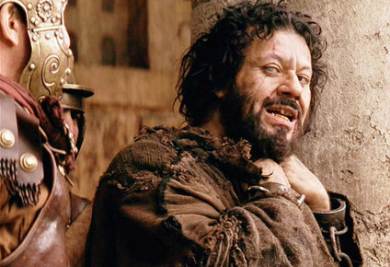
We are Barabbas


After he had said this, he went out to the Jews again and told them, "I find no case against him. But you have a custom that I release someone for you at the Passover. Do you want me to release for you the King of the Jews?" They shouted in reply, "Not this man, but Barabbas!" Now Barabbas was a bandit.


“Survey says….” How many of us know which television show those two simple words immediately brings to mind?  Family Feud of course. In the classic format of the show two opposing families tough it out trying to identify answers given to a random survey of audience members to such questions as: “What holiday besides Christmas makes the Post Office busy?” (Valentine’s Day and Mother’s Day), or Name a US state where cows outnumber people. (Oklahoma, Wyoming, TX, Iowa, Wisconsin, Montana) and “We surveyed 100 men and asked them what kinds of things do women change? (their minds, lipstick, clothes and hair, shoes, nail polish) …of course that one makes me want to ask 100 women what things they think men change. ( I think they change their socks) Americans love to take surveys.  We are hearing now about how some of those silly surveys we see on social media such as “Can you pass the US citizen’s test” or” Which state should you live in?” or “What is your personality type?” might have been used to glean information about our tastes and opinions by some not so nice folks so they could target us for certain news outlets or advertisements among other things.

One of the newest forms of surveying is known as “crowd sourcing” which originally started as a marketing tool. Crowd sourcing is defined by Merriam-Webster as “the process of obtaining needed services, ideas, or content by soliciting contributions from a large group of people, and especially from an online community, rather than from traditional sources.” And its use has spread to my own online community. People who are members of the social media site that includes the North Shore of Staten Island has had a variety of local folks seeking opinions on subjects from the mundane to the questionably relevant. “Where should I get my hair cut?”, “Anyone know the best vet in St George?”, “How would you rate your child’s elementary school?”, these are some of the question asked by my neighbors over the past year or so. Sometimes I chime in, other times I do not. Teachers with whom I worked list requests for funds on “Donor’s Choose” to get extra equipment and resources for their students.  I have actually donated to everyone from my old school (IS 27) who asked for funding.  I remember how difficult it was to get needed supplies, not to mention enrichment materials when I was in the classroom and can only think it is now more difficult than ever..  And then of course, there is “Go Fund Me” a platform that allows people in need…or in perceived need, to make a direct pitch to donors for individual causes.

In today’s Gospel reading we are witnesses to Pilate using the Biblical equivalent of the modern “crowd sourcing” when he asked the people which prisoner they wanted released, and then reluctantly acted on it.  He seems to be dumbfounded that the crowd before him preferred the release of Barabbas over the release of Jesus.  For Pilate, a governor from Rome in charge of a third rate piece of the empire; letting the Roman powers that be back home know that he was ready, willing and able to squelch any and all hints of insurrection or rebellion was important. He knew what side his bread was buttered on, and it was definitely not on the side of the Israelites. He needed to keep the peace at all costs, and keep his superiors in Rome happy by keeping any hint of rebellion at bay in a very visible and concrete way by executing those involved in such behavior. And Barabbas fit the bill.


Who was “Barabbas”? From reading the Scriptures we learn several possibilities. We know he was the prisoner mentioned in all four  Gospels who was chosen by the crowd, over Jesus Christ, to be released by Pilate in a pardon before the Passover. In Matthew, Barabbas is called a “notorious prisoner.” In Mark and Luke, he was “in prison with the rebels who had committed murder during the insurrection” against the occupying Roman forces. John, in today’s Gospel, describes him as a bandit. Yet it appears he was more than that. The name Barabbas appears nowhere else in the New Testament, nor do any of the Gospels give any information about his previous or subsequent life. The name may be a Aramaic combination of nouns meaning “son of the father” (bar abba) or “son of the teacher” (bar rabban), indicating perhaps that his father was a Jewish leader. But there is one thing we do know about Barabbas: His release makes him the definitive person for whom Jesus’ death directly allowed him to live. Jesus really did die for him in a very real and concrete way.  A way, perhaps the rest of humanity would come to realize after the Resurrection, but not on the dark Friday of Golgotha.


I actually think we are more like Barabbas than we would like to admit. And although he was someone who wanted to see his occupied homeland free from oppression, he advocated some violent means to do this; he rallied his own troops to engage in acts against what they perceived as an illegal state. He felt rage and anger at how he and his “tribe” were treated. We may or may not agree with his tactics, but we as humans can understand his feelings of frustration, anger and rage at being oppressed. But one thing for sure we know:  Jesus died in his place.  Jesus died for him. For him with his flaws and anger; for him despite his murderous actions; for him a stranger; for him a sinner like the rest of us.


So, what is the answer to the question “who is Barabbas”: We are Barabbas; the unworthy and unknowing person who Jesus died for.…and Thank God he did.


Thursday, March 22, 2018

The Quiteness of Snow...


It seems surreal. This is the time of year when we should be tucking the new spring annuals into the garden edges and planting sugar snap peas for the children to pick as soon as we begin to smell the sweet smell of the summer wind.  But, alas, today we are digging out from the fourth No'easter this month! Normally being located on the Atlantic Ocean, albeit sheltered a bit by the juxtaposition of three islands and a confluence of the ocean, a river and a sound which is near to the Gulf Stream, allows us to "dodge the bullet" that most heavy snow storms present, and we usually get less snow and more rain.  That did not happen yesterday!

I woke at 6am Wednesday to a gentle misty shower.  "No snow!", I thought; I was so wrong! Not an hour later at 7:00am the first flakes started and soon the snow was pelting and swirling and being knocked around by the wind that blows off the harbor onto my roof deck. The patio tables I had so carefully covered in the fall quickly began to accumulate layer upon layer of freshly fallen snow. The patio chairs that I have covered and bungee-corded were now on their sides sliding across the slippery snow-slicked deck stopping only when they hit the roof wall or the planter that was itself wrapped in burlap to protect the hydrangea plant. ( Dear Lord, keep my beloved hydrangea safe from the destruction of the storm!)


My decoy plastic owl, my hard-working Ollie, sat stoically on the ledge overlooking Bay Street as more and more snow accumulated on his head! An occasional sea gull would fly by giving him a rather wide berth.  No starlings, sparrows or the obiqueous pigeons made appearances that day! Not one was in sight. They had hunkered down somewhere out of the cold and windy falling flakes. And I did the same.

This turned out to be the perfect day to get all those things done which I have left undone. Correspondence via snail mail and email to friends, kith and kin...and other matters that needed to get done like a month ago. And then, there was silence!

And silence is not a bad thing.  It gives us time to slow down and relax in ourselves. It was time to turn off the T.V. and spend time with myself doing stuff I have not done in a while, but enjoy.  So, I knitted; I read and I meditated.  I actually took some time and watched the snow fall from three different locations in my apartment: from the deck doors from which I normally see ships coming in and out of the harbor, I could only see faint red lights coming from the taillights of the brave drivers of cars and trucks as they slowly crossed into Brooklyn for reasons unknown to me.  From my bedroom window that usually provides me with an expansive view of Breezy Point, Coney Island, Bay Ridge, and Red Hook, all I could see was globs of snowflakes hitting against my windows.  And from the sliding doors to my living room balcony, all I could see was the outline of trains as they plowed passed my building either into or out of the ferry terminal.

The only noises I could hear were an occasional fog horn and the whistle of the trains as they chugged and stopped at the local station.  I could not even see if anyone was walking to or from the stairs to the station itself.  Everything halted, as if everything was frozen in time and space. And so it was...for a day.

And now, a new day is here. Things are slowly getting back to "normal". The kids are back at school; driveways are shoveled; streets are plowed; the sea of snow is gradually receding and I am hearing a slow and steady drip-drip-drip of melting all around me. Tomorrow this snow will be but a memory for all of us, but the gift of enforced slow-down; a snow day, a slow day is something that we can all look back on and, hopefully, smile...at least a bit.

Wednesday, February 28, 2018

Am I getting grumpy, or is Lent getting me down?


Over the past several days, I have noticed a kind of annoyance creeping into my daily life.  I find myself making nasty comments during commercials, yelling at politicians on the news, shaking my head and mumbling smart-ass comments while listening to talk show hosts seriously interviewing twerts about their tweets. I even felt myself engaging in some passive-aggressive behavior at my local gym when the lady who checks me in began to instruct me on how to hold my ID card so she could scan from her preferred seated position.

The commercial for hiring contractors, plumbers and other craftspeople with the guy who claims since he is now a father he no longer wants to spend his Saturdays fixing a toilet annoys me to no end.  Fatherhood is not a valid reason to engage in a job that should always be handled by a professional. Why would you ever attempt this if you are not schooled in the skills needed? Just call the plumber, for heavens sake!

The young couple who bought a time share in Maui after their honeymoon who went there "...all the time!" for two years until they had a child.  These poor folks could not handle juggling an infant and a vacation at the same time. Can they walk and chew gum?  One would think a vacation is something they all needed. I can recall packing up three children, one of whom was in a stroller, and driving to Florida, picking up Grandma and gong to Disney World for a week. It is called organization. Get organized!

Yesterday I caught the tail end of one of those court TV shows where disputing parties can go and get a very public sort of justice. A tall, slim elegantly dressed young twenty-something in stiletto heels and a pencil skirt was suing a rather rag-tag street hustler for selling her a knock off designer bag at the outrageous price of $1,200!  Seems that cost of that bag, as outrageous as I thought it to be, was really a bargain-basement price. She insisted that it was really a phony that he passed off onto her as real. She was incensed that her friends would know she fell for a fake. She needed them to know she only bought the best. To prove her point she produced two of her wide collection of bags by the same designer so Judge Judy could compare and contrast the qualities of genuine and fake handbags.  Why anyone would need a $1,200+ handbag is beyond me, but to own three of them is simply beyond my power of understanding. I can hear my Mother's voice repeating over and over, " If it seems too good to be true; it is." Simple advice, rings true every time. I guess pouty-girl's Mama didn't tell her that one.

I have to admit, I find that I am becoming more and more difficult to live with under this cloud of grumpiness. Some how it must be shaken off!

In order to deal with this creeping feeling of grumpy,  I have turned to a Lenten discipline that I am sharing with a group.  Using the materials from the Society of St John the Evangelist, "Meeting Jesus in the Gospel of John", I spend some time every day listening to a brief video, reading pieces from scripture, and meditating on the words written so very long ago. The word that is sticking with me is "abide". In its modern translation, "abide" means "to accept , put up with or endure". The archaic meaning is probably the one most close in meaning to its Biblical use, " to reside or live with". So I have decided to "Abide" a bit with my cloak of grumpiness, and see how long I can really live with it.

I suspect as the dark days of Lent recede and I can begin to see the Easter Dawn over the hill, I will soon emerge from these forty days and shed this darkness of the soul, and begin to think about moving into the light. At that point I hope to rejoice with the Dad who wants to spend more time with his child; I hope to nod with great approval for the couple who are saving money and spending more quality time with their son.

But...... I can't promise I will even begin to understand the multi-purse girl. Ever.


https://www.last.fm/music/Thelonious+Monk/_/Abide+With+Me


Wednesday, February 14, 2018

Ashes to Ashes, redux....

On a rather cold February evening five years ago, I sat stoic and silent through yet another Liturgy Committee Meeting at the Episcopal Church where I was then serving as deacon, when, as the meeting droned on to its ultimate end, an interesting thought crossed my mind. Ashes-to-Go...I had seen an article about this new movement in the Episcopal and other mainline churches that brought the distribution of Ashes out of the church building and into the streets, byways and intersection of sacred and secular so that the people of God on their daily journey, could slow down and have a moment, a mere moment, in which to contemplate the fragility of life and to seek to embrace more closely and dearly the juxtaposition of the Divine and mundane in all of us.  I suggested we distribute ashes on the upcoming Ash Wednesday at the Staten Island Ferry Terminal about a mile from our church.

To say my suggestion, Spirit-inspired, I thought then and still do, was wildly embraced would be a gross understatement.  The jaw dropping looks and silent stares on the faces of the participants of that committee who had just complied a month long list of liturgies, hymns, rites, and rituals for a most penitential of penitential seasons hit me like the proverbial ton of bricks.  

"Hum," I thought, "That went over well." I headed home and figured that was the end of it, but I was, thank God, wrong.

Half an hour after arriving home, I got a very late night call from my then rector. "That was the most exciting thing I have heard at a Liturgy Committee meeting since I arrived here. Do you think we can do this?", he inquired.  I responded that I thought we could. And he put me in charge (Thanks, Chuck!), noting that if we got arrested, I would be the one to call our parish lawyer and explain.

That Ash Wednesday we proceeded quietly and cautiously setting up near a coffee shop just outside the ferry waiting room. We were joined by a layman from our parish who counted the number of people we imposed ashes upon; he give everyone a card with the name of our church and the prayer for the day. We gave over 225 people ashes that morning: commuters mostly, but policemen, cooks, construction workers, mothers with babes in arms, students, lawyers, clerical workers, teachers, and many others. And we prayed with others, folks in need of prayer for themselves or loved ones.

And we did it the next year expanding our footprint we joined with our neighboring Lutheran congregation and increased our numbers to close to 300. We found that people were asking where we were going to be; some actually waited for us to get there and set up shop.

Over the years I have had all kinds of assistance: postulants for ordination have assisted, as have clergy from other denominations.  Some of the priests and pastors that assisted have moved on to other calls or to their eternal rest. I think of them each time we engage in this ministry.

One year we were required to get a permit and were moved around the terminal. We were always polite and followed the directions of those in charge. The interesting thing was they apologized to us over and over again for the inconvenience they were causing us. Sometimes it is tough being a bureaucrat.

This year we arrived on the other side of the ferry at 7:30 am and stationed ourselves just beyond the jurisdiction of the municipal authority for marine and aviation. It was cold and windy, but there were four faithful servants imposing ashes on, praying with and being blessed by the presence of so many children of God, a total of 238, who took a moment out of their busy day to acknowledge their mortality and the immortality of their Creator: "Remember, thou art dust, and unto dust thou shalt return."

Monday, January 15, 2018

Sunday Sermon 2 Epiphany


            "Can anything good come out of Nazareth?” John 1:47
                        Second Sunday of Epiphany 2018

In today’s Gospel we hear an interesting conversation between two young men who will become two disciples of Jesus, Phillip and Nathaniel. Phillip, a newly called disciple of Jesus who hailed from Bethsaida on the coast of the Sea of Galilee, while talking to his friend, Nathanael, added “from Nazareth” to Jesus’ name as a means of identification since the name was a common one, and it located exactly who he was, and where he was from.  Nathaniel’s response certainly shows his personal bias and prejudice against the town from which the longed for Messiah sprang. “Can anything good come out of Nazareth?” He sort of scoffs, and as we close our eyes, we can easily imagine him with a condescending smirk on his face. He has some strong pre-conceived notions about that tiny village. Why is this local prejudice showing? Well, Nazareth was the decidedly quintessential “backwoods” town, a far flung hamlet of a massive empire whose population might have topped 500 when Jesus was living there. Smallest of the small potato towns in the smallest and most inconsequential part of immensely important Roman Empire, in our modern jargon: a real nothing burger.

And yet, I feel drawn to the plight of that little town because, even though we live in one of the largest cities in the world, our piece of the city, in the words of the late comedian Rodney Dangerfield, gets no respect. We are the Nazareth of the Big Apple. There are some folks who don’t even realize we are part of New York City.  Listen to the hordes of tourists who cram onto our beloved ferry to get a glimpse of the Statue of Liberty.  I think every travel agent in the rest of the country and overseas tells each person who comes to New York that the ferry is free, and to ride it, and get right back on to return to Manhattan because there is nothing to do in Staten Island.  I have heard tourists tell each other that Staten Island is where the rest of New York City sends their garbage…not so.  Just FYI: the city’s garbage is sent by barge or trucked to a landfill in Pennsylvania (I learned this from my son who works for the Sanitation Department).

I have also heard that the people of Staten Island are very backwards compared to those who live in Manhattan or Brooklyn. I can’t tell you how many times I have heard people at Diocesan meetings ask me if I have my passport with me…and then laugh. I usually tell them it takes me less time to get there by mass transit with a metro card than those folks who travel from the mid-Hudson region, and, please note, they never ask them the same question.  (If I sound a bit annoyed, well I am)

I have read in the national media that we who live on this rock, hold old fashioned ideas and are intolerant of others, including immigrants. These folks don’t know what the truth is.  Here on Staten Island we are home to the largest Liberian population outside of Liberia and the largest overseas Sri Lankan community on earth. Take a walk up Victory Boulevard and you will see Caribbean beauty parlors, Latin American bakeries and florists, Sri Lankan restaurants, and Halal supermarkets next to Chinese, Columbian and Italian restaurants.  Immigration comes in waves on our island and many hardworking immigrants are making an impact on the makeup of our island and its commercial enterprises. Statistically the 49th City Council District that encompasses our North Shore, is the most diverse in the whole city.

And we know something else; something we need to broadcast more than we do.  Many faithful Christians live out their faith live here.

 And just as Nazareth, that small, insignificant town filled with hill-billies and small-minded, unimportant people, was the place from which sprang the one who was to be the Messiah, the Son of God, the Savior of the world; here in this corner of the world, on the streets and in the schools, in the offices and in the parks, in the restaurants, pubs and the churches of our little island, there are the people of God every day who are living out their faith in both small and glorious ways: bearing witness to the truth at work and at play, expanding their faith in Bible study groups, visiting our neighbors in hospitals, hospices and homes,  engaging in prayer groups, bringing the concerns of the world to the church, to this altar, and hastening the Kingdom that is to come.

Despite the concerns of Nathaniel, we know that everything good came from Nazareth, and from that “good” the “good” continues to grow from here, our small corner of the greater Kingdom, as well.  

Thursday, January 4, 2018

Hey NYC Kids: SNOW DAY!

In the closing minutes of the movie "Hope and Glory", a story about the life experiences, for good or ill , during times of unspeakable horror and idyllic moments in the English countryside, of a Londoner schoolboy during the Second World War, we see the unabashed glee of the entire student body who arrive to find their school has been bombed and destroyed by the German blitzkrieg. "Thank you, Adolph!", an elated ten year-old boy joyfully exclaims as he throws his school books into the air. There was something of that macabre joy and irony here in New York City today as the first official "Snow Day" was called on the almost unpresented night before this hellicious storm even hit.
                                                                                                      
The palatable joy that bust forth on my Facebook feed last night around 9pm was fast and furious, and not from the kids.  As a retired New York City educator: teacher, mentor and staff developer, I have many friends and relations who are still involved in that behemoth of a bureaucracy known affectionately as the DOE: The New York Department of Education. Over my many years in the employ of this municipal agency, the calling of a "snow day" has always had major political as well as public safety considerations. It always appeared "dicey" to me once mayoral control of the schools was wrested from local school districts by Mayor Bloomberg in the early 2000's. During that time most decisions came out of "Tweed Courthouse" that hunk of a building that bears the name one of the most corrupt men in our city's history, William "Boss" Tweed, who ran this municipality from his political core, the Tammany Hall Democratic Club. It sits on Chambers Street in one of the most congested parts of Manhattan.                         

One thing locals understand about Manhattan is that it is built on rock, a very specific rock called Manhattan Schist, a gneiss that is the result of volcanic activity and then the movement of a polar icecap that resulted in a very hard and dense bedrock that makes the construction of skyscrapers possible (that, and the invention of the elevator). This bedrock holds the heat that is generated by both the subway system and the steam heat systems that warm our many municipal buildings which surround City Hall and the Tweed where such decisions as school closings are determined. So when decisions are made in Manhattan, where snow melts quickly, the rest of the city suffers and shovels out from under lots of outer-borough snow.  Mayors Dinkins, Koch and Bloomberg were all Manhattan dwellers whose children were all either grown and gone or non-existent, so their decisions were made from an economic point of view....i.e. parents need to get to work; ergo, schools need to be open. Now we actually have a Mayor whose children went to public schools when the family lived in Brooklyn on a street that did not always get plowed on a regular basis.  He understood the dilemma: Do I keep them home, or do I send them out in the storm? Who is going to be here if they stay home? Whom can I call to help out? These questions are easier to navigate the night before as opposed to the morning of. 

But I digress.                              

I recall with fondness those days spent snuggled under my parents' down comforter listening intently on the local radio hoping to hear that my personal school was closed or, for the "big announcement" that ALL the schools in the city: public, private and parochial, were closed. The one thing that knitted all of the schools together was the school bus system, and once that was compromised, the whole system ground to an icy halt. Ah, the sweetness of that news, nothing could compare except that final June day that marked the beginning of summer vacation.  But summer break or the hard won winter break (once referred to as Presidents' Week) are known factors, a "Snow Day" is serendipitous and random...a gift from Mother Nature, so to speak...an unearned respite that causes one to slow down and hunker down and often inspires a day of baking and soup making that will fill your home and your stomachs with the joys of the winter's cuisine we often take for granted.

So, boys and girls, friends and foes,daughters and sons, grandchildren and happy nieces and nephews: Enjoy! Relish this gift of at-home time granted on this snowy and windy winter day...make merry and make muffins and most of all make memories!